Leading disaster recovery firms join councils to oppose Canberra cuts
Published on 21 July 2026
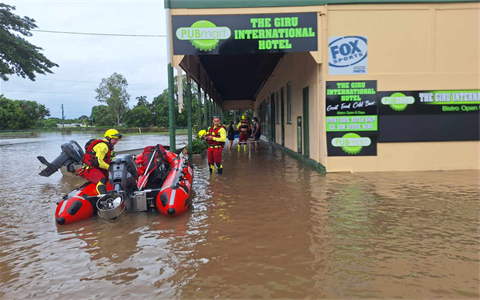
Disaster recovery, repair and reconstruction companies have joined Queensland councils to share concerns about proposed Federal disaster funding cuts and to lend their support to the campaign for the dud deal to be dumped.
Some of the state’s biggest and most experienced firms – who send crews and equipment into disaster-torn communities to help them rebuild vital infrastructure following floods, fires and cyclones – have voiced their concerns about planned reductions in Federal support.
The peak body for Queensland councils, the Local Government Association of Queensland (LGAQ), says it shows fears are growing about what the proposed reduction in the Federal Government’s contribution to disaster recovery from 75 per cent to just 50 per cent, announced in June by Federal Emergency Management Minister Kristy McBain, would mean for the state.
Damage Control Project Management (DCPM), a national specialist firm headquartered in Brisbane, employs project managers, engineers and site supervisors with experience supporting local and State government organisations across Australia preparing for and responding to disaster events.
Chief Executive Officer John Tuxworth said DCPM, a recognised leader in disaster recovery, is acutely concerned about the prospect of reduced Federal funding in future disaster recovery and the impact on state and local governments.
“Less Federal funding would disproportionately adversely impact Queensland as the state that has been most frequently and most severely damaged by disasters,” Mr Tuxworth said.
“The proposed 50-50 State and Federal funding split, combined with the reported $2.7 million disaster activation threshold, will add to the existing strain on State governments.”
“It will incentivise states to pass this strain on to local governments in the form of further tightening, complications and delays to the provision of critical disaster recovery funding to local government areas when they need it most.
“The areas that are most likely to suffer as a result of these changes are regional, with large territories, extensive unsealed road networks and few resources.”
Gold Coast-headquartered Lackon is a leading provider of specialist project and construction management services throughout Queensland and New South Wales.
“We are a Queensland company employing Queenslanders, and we are proud to support communities when natural disasters strike and recovery efforts are needed the most,” said Lackon Managing Director, Luke Carruthers.
“We are proud to deliver projects from the northernmost point of mainland Australia in Bamaga, through remote communities such as Kowanyama, and all the way to Eurobodalla in southern New South Wales.
“Our teams see firsthand how important it is not only to prepare for natural disasters, but to support communities immediately afterwards restoring the road network across regional Queensland and New South Wales, the lifeline that connects people, businesses and essential services.
“For many remote, regional, Indigenous and First Nations councils, these proposed funding changes are far more than an adjustment to intergovernmental funding arrangements.
“They effectively transfer a greater share of disaster recovery risk to local governments that often have the least financial capacity, the smallest workforces, limited access to specialist resources and the highest exposure to natural disasters.
“If the proposed changes proceed, Queensland councils, the communities they serve and Queensland-owned businesses like Lackon that support recovery efforts will all be placed at a significant disadvantage.
“Most importantly, it is regional communities that risk waiting longer for the restoration of critical infrastructure following disaster events.”
Former Queensland council CEO Mark Crawley, a 45-year veteran of the local government sector, has also joined the growing chorus.
The Managing Director of Mark Crawley Consulting said he has been busy ever since establishing his advisory business supporting councils following natural disasters, including a trip through central western and south western Queensland following the flooding event that devastated the region in early 2025.
“We understand the impacts that natural disasters can have on communities and are ready to assist community leaders through the management of these disasters and the community recovery efforts that follow,” Mr Crawley said.
“I’ve worked in many diverse councils and know first-hand how stretched councils are, they receive the least funding of all three levels of government, and they need financial support to help communities rebuild, recover and rebound after severe weather events.
“The support councils need includes funding to bring in the external expertise, construction and engineering know-how for significant post-disaster work that may not exist within council ranks.”
LGAQ President Mayor Matt Burnett said councils rely heavily on specialist skills and expertise following natural disasters.
“Queensland communities, big and small, require so many different skillsets to help communities get back on their feet, and this is expertise that is needed 24/7 for critical services,” Mayor Burnett said.
“It is work that is over and above the business as usual activities of a council, which is why the current level of funding from the Federal Government is so critical to ensure communities receive the support that is needed.”
LGAQ CEO Alison Smith said post-disaster clean-up work can be expensive and extensive.
“Following events like cyclones and floods, there is no shortage of work that is needed in communities – everything from repairing roads and bridges, water treatment plants and pipe networks, engaging environmental health professionals, project management, infrastructure and resilience assessments and so much more,” Ms Smith said.
“Communities look to the Federal Government for support in desperate times, and when Canberra collects 80 cents out of every dollar of tax that we all pay, compared to 17 per cent for the states and just three per cent for local government, councils expect that Canberra will provide the most financial support in times of need, not reduce its contribution to just 50 per cent.”
Just last month, a national vote was passed by councils attending the National General Assembly of local government in Canberra, calling on the Commonwealth to abandon its proposed 50:50 funding model that would reduce its level of disaster recovery funding.
Meanwhile, the LGAQ is currently working with Queensland’s 77 councils to prepare a statewide submission that will call for the current Disaster Recovery Funding Arrangements to be retained.
The existing arrangements enable the Federal Government to provide funding to states and territories to share the financial burden of responding to a natural disaster and supports the provision of urgent financial assistance to disaster affected communities.
The LGAQ will lodge its submission opposing changes to the current levels of Federal funding for disaster recovery with the National Emergency Management Authority on 19 August.
Image from: Queensland Fire Department
For more information, please contact:
Dan Knowles, Media Advisor
Phone: 0432 681 664
Local Government Association of Queensland