Queensland mayors join LGAQ campaign for more road funding
Published on 12 March 2026
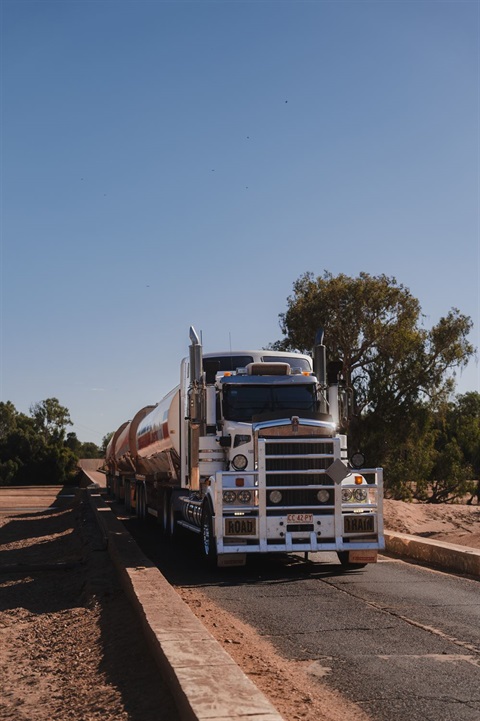
Mayors from across Queensland have spoken out about the alarming number of poor-quality roads in regional, rural and remote areas and are calling on the State Government for increased funding to carry out urgent upgrades.
The mayors have thrown their support behind a Local Government Association of Queensland (LGAQ) campaign to lock in a permanent annual road infrastructure funding boost in the June State Budget.
The LGAQ says a permanent increase in the Transport and Infrastructure Development Scheme (TIDS) to $100 million a year is needed to improve road safety and support local economic development.
The LGAQ campaign is supported by recent research revealing nearly half of Queensland’s unsealed roads are in either poor condition or in need of repair.
The Queensland State of the Assets Report also confirms that dilapidated timber bridges and failing water infrastructure are posing on-going risks to community safety.
LGAQ CEO Alison Smith said the report validates calls from councils for a long-overdue increase in road funding, essential to keep Queenslanders moving safely while supporting stronger local economies.
“We need a long-term funding commitment to allow councils to work in genuine partnership with the State to build safer, more resilient road networks in the regions,” Ms Smith said.
“Well-maintained roads sit at the heart of a strong transport network that keeps people and freight moving efficiently, helping to underpin economic development.
“Along with improved safety and reliability, increased road infrastructure funding will deliver stronger connections between regional centres, businesses and essential services.”
Ms Smith said that while councils welcomed the State’s commitment of $75.95 million in TIDS funding through to 2027–28, more funding was needed to ensure critical infrastructure upgrades could continue.
“TIDS plays a vital role in supporting pavement rehabilitation and widening, new and upgraded pathways, the progressive sealing of unsealed roads, and targeted safety improvements across the state,” she said.
“The projects delivered through TIDS improve access and reliability for agricultural producers, freight operators and regional industries by strengthening links to markets, processing facilities and transport hubs.
“Just as importantly, they improve everyday connectivity for local communities, supporting economic activity and safer travel for all Queenslanders.”
Longreach Regional Council Mayor Tony Rayner said TIDS funding was critical for his council in western Queensland.
He said Longreach had a lot of vital road networks that were experiencing increased traffic volume every year and it was critically important that people were able to get to destinations safely.
“Continuing to improve each of those roads is very important to enable people to drive safely to their destinations,” he said.
Diamantina Shire Council Mayor Francis Murray said an increase in road funding was “all about safety and accessibility”.
“We still have gravel roads out here. The sooner they’re sealed the better,” he said.
“It’s costing at least $1 million a kilometre to seal roads out here – and that keeps going up.”
Etheridge Shire Mayor Barry Hughes said economic development was key to the long-term sustainability of communities across the North and Northwest. “TIDS certainly plays a major role in that,” he said.
Boulia Shire Council Mayor Rick Britton said his region had many roads that were shared by triple road trains, cars and caravans.
“It’s all about road safety… for some people, it’s pretty daunting when you leave Brisbane and come out here on to narrow roads with a car and caravan, and you see these massive triple road trains,” he said.
Mayor Britton said drive tourism was increasing in the region – it was no longer just “grey nomads” but also families during school holidays. With safer roads, even more tourists would be encouraged to visit and enjoy the local area, he said.
Isaac Regional Council Mayor Kelly Vea Vea said assets like roads were the lifeblood of the Isaac community.
“They connect us to our healthcare, connect our workers to homes and loved ones to families. Statewide, sealed and unsealed roads are the highest value asset ranked in ‘poor’ condition in the Queensland State of the Assets Report. A permanent State funding boost to road funding would make our roads safer – and better connect our regions.”
Flinders Shire Council Mayor Kate Peddle said councils were not immune to cost of living challenges – which were placing additional pressure on building roads and supporting contractors.
“I think any financial support that regional councils can get is absolutely vital. We have quite large and diverse shires. We have major industries that we need to support in the region. We don't have the resources to be able to put onto these roads ourselves. So TIDS is vitally important to us."
"We can't do it without funding. So I would really implore the government to consider increasing the TIDS funding.”
In the heavily populated area of South East Queensland, well maintained roads are critical.
Somerset Regional Council Mayor Jason Wendt said in Somerset, roads were vital arteries keeping industries and communities connected.
“Road construction costs have increased around 30-40% in the last three years in our region – this means that to build the same road, we need more funding.”
Logan City Council Mayor Jon Raven said that with the population of Logan set to almost double in coming decades, the demand on its travel and road network would intensify.
"Both our long-term and new residents are crying out for more upgrades to our roads than rates alone can afford. A boost to roads funding is critical to meet our community's expectations and keep them safe.”
Noosa Shire Mayor Frank Wilkie said adequate funding for roads played a key role in maintaining safe travel across Noosa.
“We face a range of pressures on our infrastructure – including increased costs as we continue to evolve as a community and a popular visitor destination.”
“It is critical that road funding keeps pace with increased costs and demand to allow Noosa to thrive.”
Toowoomba Regional Council Mayor Geoff McDonald said that the population in Toowoomba was growing – increasing by 1.4 per cent, or around 2,500 people, per year.
“This puts pressure on our existing assets – but also requires new infrastructure like roads, sewers and water to support growth.
"Councils have limited ways to raise funds, and we need to keep providing the services that make our community liveable. We need greater State and Federal support to maintain and grow our assets in line with population growth.”
Charters Towers Mayor Liz Schmidt said that safe, efficient, and effective road networks were critical to the key economic pillars of her region: mining, agriculture, and tourism.
“North Queensland’s size, population and weather conditions – like our wet season – all contribute to the requirements of our road networks.
"Greater investment in a program like TIDS would help unlock opportunities and capitalise on the potential we have to grow.”
Blackall-Tambo Regional Council Mayor Andrew Martin said roads were key drivers of the agricultural industries across Queensland. “
“TIDS is a program that is the vital link in providing products like tourism and agriculture – it is most important.”
Winton Shire Council Mayor Cathy White said that roads were the lifeblood of the Winton region.
“Our major industry is agriculture. Having safe roads to bring our product all around Queensland is vital for us. We all want to get home safe.”
South Burnett Regional Council Mayor Kathy Duff said the TIDS program had funded key projects contributing to tourism and economic development in her region.
“It is critical to increase the amount – because everything is becoming more costly.”
Richmond Shire Mayor John Wharton said the TIDS program was essential for regional safety and access for emergency services.
“Many communities these days have different first responders that come from other areas. when there’s a call out, especially in the rural and remote councils, they’re not really sure where to go.
"But if you’ve got sealed roads, they can hit the road and have a pretty good idea where they’re going.”
North Burnett Shire Mayor Les Hotz said with 4,900 kilometres of roadway in his shire, TIDS was critical for maintaining and upgrading major infrastructure.
“Road safety is paramount – and we are always looking for funding for the upkeep of the roads.”
Barcaldine Shire Council Mayor Rob Chandler said TIDS funding was used to make his region more liveable.
“It’s a great scheme and we would love to see some more money in the TIDS bucket.”
For more information, please contact:
Martin Philip, Media Advisor
Phone: (07) 3155 4003
Local Government Association of Queensland